
Light-Weight Autonomous UAV for Obstacle Avoidance
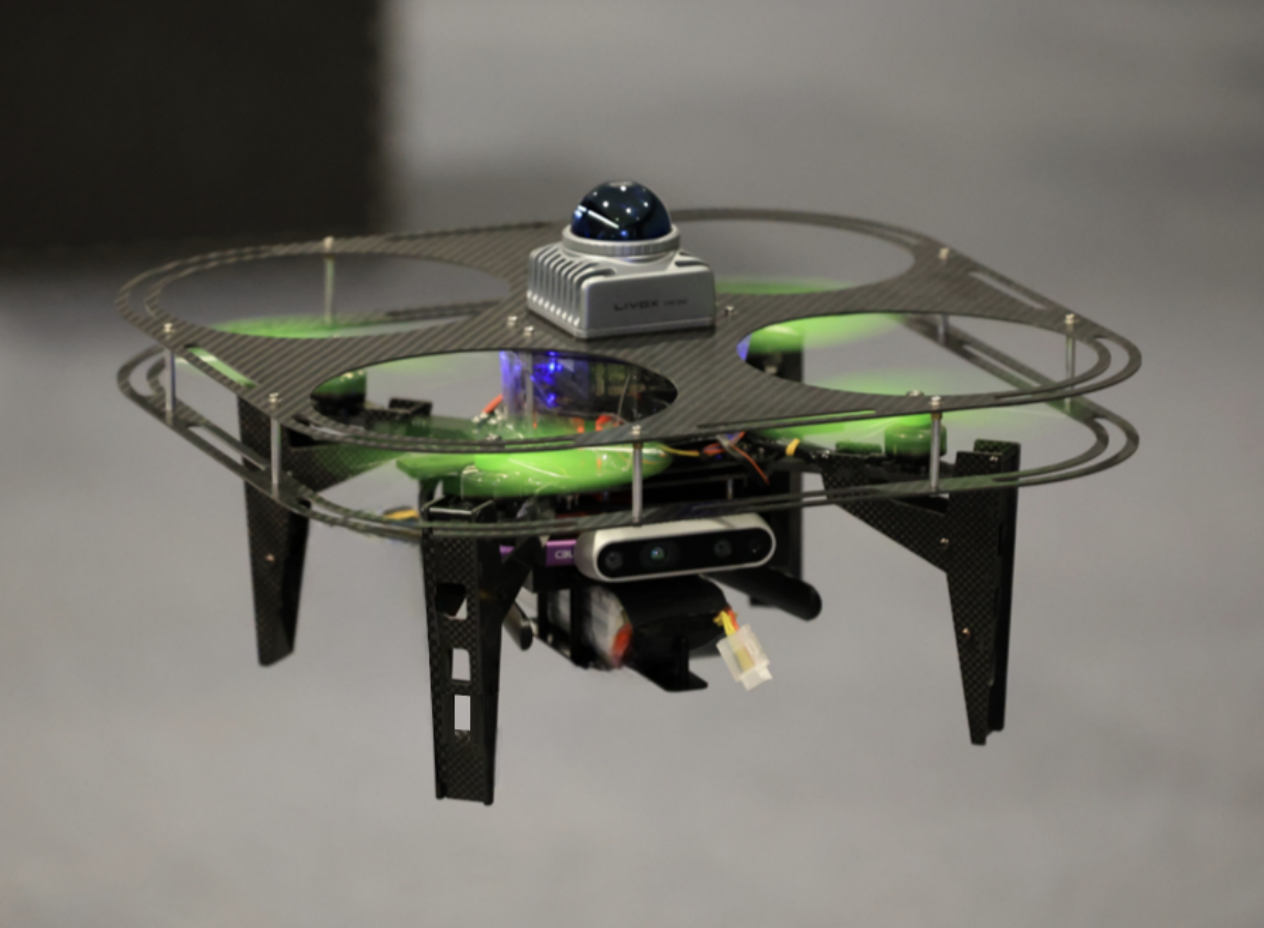
- Description: Developed a lightweight Unmanned Aerial Vehicle (UAV) equipped with LiDAR and Intel RealSense D435i cameras. Implemented Fast LIO (LiDAR-Inertial Odometry) and integrated it with a PX4 IMU to increase odometry frequency. Achieved fully autonomous navigation without relying on external localization systems such as GPS.
- Role and Contribution:
- Led development of a 2.0kg 3D LiDAR quadrotor with stable 30Hz LIO localization for GPS-denied flight.
- Designed a lightweight UAV platform equipped with LiDAR, RGB-D camera, onboard computer, flight controller, and additional sensors to ensure reliability in various conditions.
- Achieved accurate and reliable LiDAR-based localization in GPS-denied environments, addressing critical challenges in autonomy.
- Developed a durable platform design to minimize the risk of drone crashes, ensuring operational stability in complex and confined spaces.
- Autonomous Flight & Obstacle Avoidance Framework
Tech Stack
Hardware
Software
Key Features
Autonomous navigation
Navigates complex environments without GPS, using LiDAR and visual sensors for real-time localisation and mapping.
High odometry frequency
FAST-LIO2 fused with the PX4 IMU raises the odometry rate, giving accurate and stable flight control.
Light-weight design
Optimised for minimal weight, extending flight duration and improving manoeuvrability.
Modular architecture
Hardware and software components can be upgraded or maintained independently.